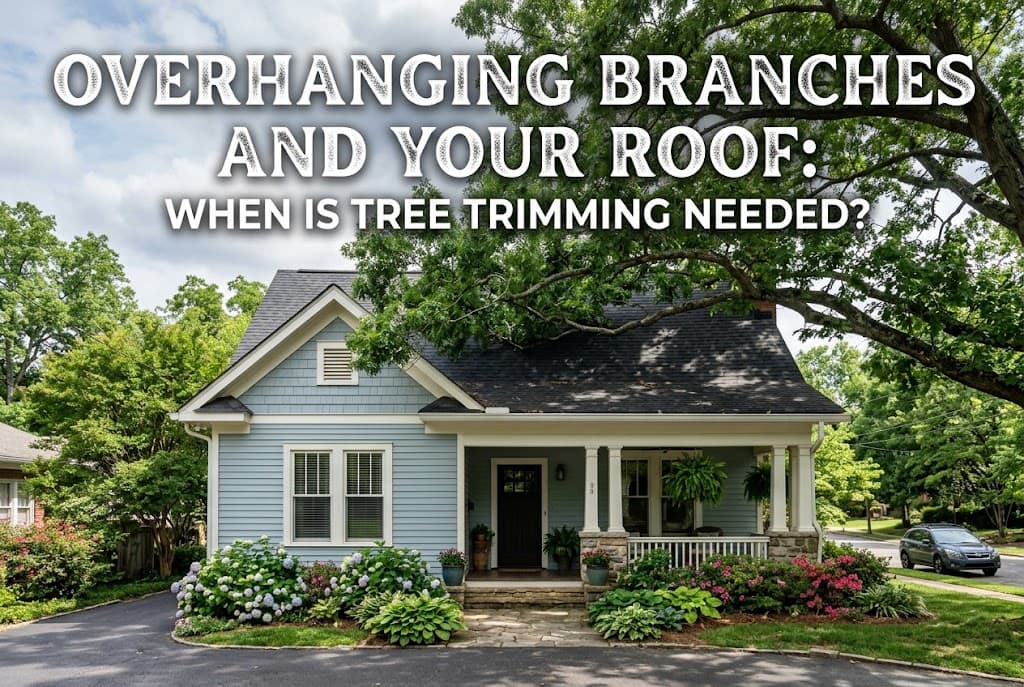
A leafy branch over the roof can provide welcome shade in a Chattanooga summer. It can also raise questions when it scrapes shingles, drops a broken limb, or hangs lower after a storm. A branch above a house doesn’t automatically mean the tree needs removal. The more useful question is whether there is contact, damage, or a structural concern that calls for action.
Wysong Tree Service provides tree trimming and removal in Chattanooga and nearby communities. A professional can assess the tree and recommend work that addresses the problem without cutting more than necessary. Here is what to notice from the ground and what to discuss during an estimate.
Separate shade from contact
Start by looking at the relationship between the branch and the building. A branch that passes above the roof with clearance is different from one lying on shingles or brushing the gutter. Watch from a safe location during ordinary wind if you have noticed noise against the house. Never go onto a roof or climb a tree to check the distance yourself.
Look for damaged branches, cracks, deadwood, and limbs that have recently changed position. A branch heavy with leaves may hang lower than it did in winter, and rain can change its movement. Photograph the area from several angles so the crew can see the concern. If the branch has already struck the house, have the appropriate contractor check the building materials as well.
Do not assume that every bit of leaf litter or every shaded patch means a tree is unhealthy or dangerous. Leaves and small twigs are ordinary maintenance concerns. Base trimming decisions on clearance, the branch’s condition, and the tree’s structure rather than frustration with routine cleanup alone.
Consider the size and condition of the limb
A small branch touching a gutter may need a simple clearance cut. A large limb over the roof deserves a broader assessment, especially if it has a crack, decay, or a weak attachment to the trunk. A tree professional can examine how the branch is supported and what could happen if it fails. Recommendations may include selective pruning, monitoring, or removal of a tree that cannot be made reasonably safe.
The whole tree matters. A branch may be healthy while the trunk or roots show a more serious defect. Conversely, a sound tree may need only a few careful cuts near the building. Ask the crew to explain both the immediate roof issue and the condition of the rest of the tree. That helps avoid repeated visits that treat only the most visible tip of a larger problem.
Be cautious of a proposal to strip one side of a tree or top its crown without a clear reason. Large, unnecessary cuts can change its structure and growth. The pruning objective should be specific: remove a damaged limb, create appropriate clearance, or improve a defined structural concern.
Know why trimming is not always the answer
Pruning can move a branch away from a roof, but it cannot fix every risk. A fresh split in the trunk, roots lifting from the ground, or a tree that suddenly leans toward the home calls for prompt assessment. In some cases, preserving the tree through trimming may not be practical or safe. Removal may be appropriate after the site and tree are evaluated.
Other situations may call for patience and monitoring instead of immediate cutting. If a healthy branch has ample clearance and no structural defect, routine inspection may be enough. A professional can explain when to check it again, especially after strong wind or nearby construction. The goal is an evidence-based decision, not a rule that all branches over roofs must go.
If the branch is near an electrical line, stop there. Do not touch it, use a pole saw, or arrange ordinary trimming without discussing the utility hazard. Contact the utility company for guidance. A branch can move into a line during cutting even when it does not appear to touch it at rest.
Prepare for the work around your home
Tell the crew about fragile landscaping, fences, decks, and narrow access near the tree. Move vehicles and outdoor items if requested and safe to do so. Ask how they’ll lower branches, whether the roof needs special protection, and what cleanup is included. A clear scope should identify the limbs to be addressed and the reason for each major cut.
If you are also planning roof repairs, gutter work, or an addition, share that timeline. Coordinating work may make access easier, but don’t leave an unstable branch in place just to match a renovation schedule. After trimming, take a photo from the same position used before so you can compare the clearance as the tree grows.
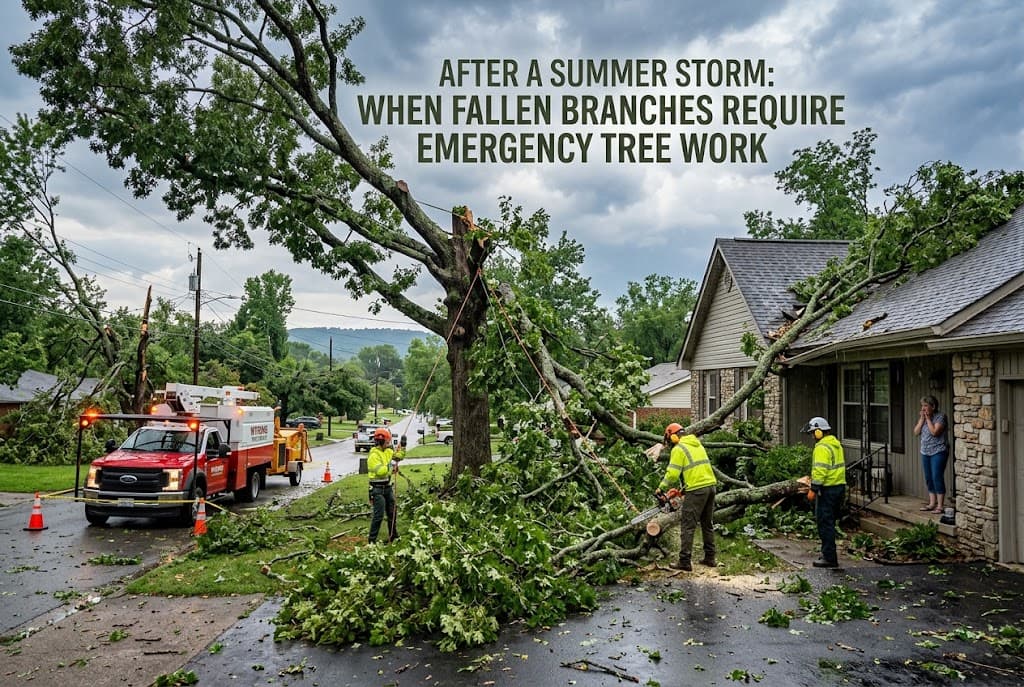
Check the tree again after severe weather. Stay away from a broken, hanging limb, and do not try to pull it off the roof. If a tree or branch has fallen onto the house, prioritize personal safety and contact the appropriate emergency or utility service for electrical or structural hazards before you begin cleanup.
Keep both the home and the tree in view
Good tree care near a building balances the need for clearance with the tree’s health and structure. It also accounts for the people who use the space below. A useful estimate explains what will be cut, what will remain, how debris will be handled, and whether another inspection is recommended later.
Wysong Tree Service serves Chattanooga and surrounding communities with tree trimming, tree removal, and emergency tree work. If branches touch your roof, show visible damage, or worry you after a storm, contact the team to discuss an assessment and a practical plan for your property.
If several branches are near the roof, resist the urge to request a uniform cut along the entire roofline. Each limb connects to the tree differently. Ask which branches can be pruned back to an appropriate lateral branch and which, if any, should be removed. A deliberate plan can create clearance while preserving a natural crown. The crew should also explain whether the desired clearance will last through another growing season or should be reviewed sooner.
After the work, check the gutters and roof from the ground or have a building professional inspect them if there is a known issue. Tree trimming removes or reduces the branch concern, but it does not repair a damaged gutter, loose flashing, or worn shingles. Keeping tree and building tasks separate helps you confirm both are complete. Save the tree service’s recommendation for future maintenance, especially if a mature tree will continue to shade the home.