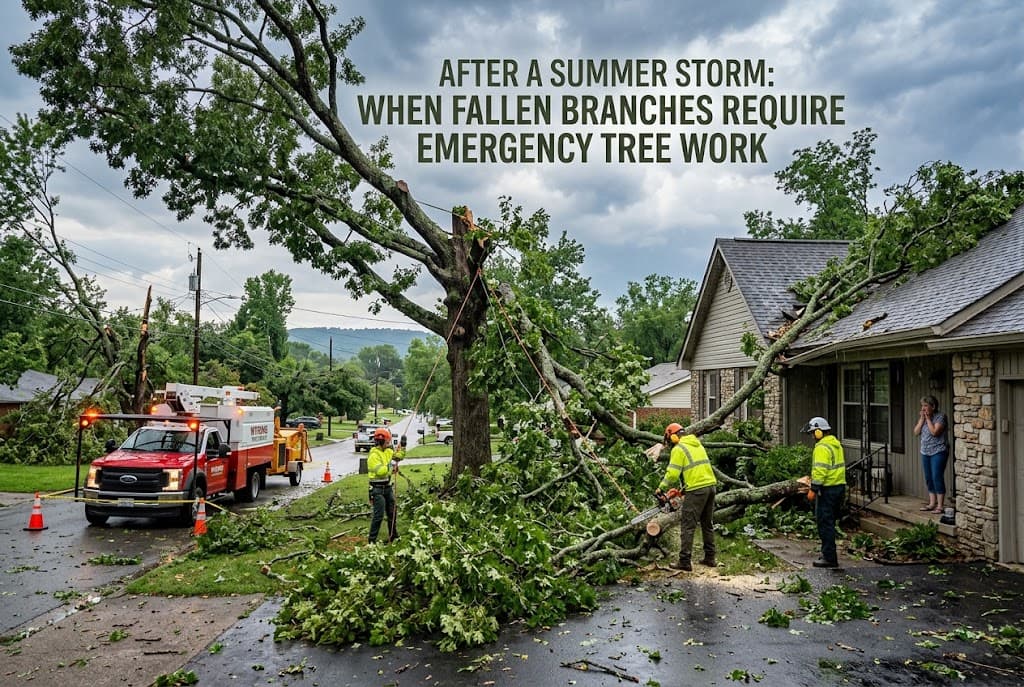
A summer storm can pass through Chattanooga in an hour and leave a complicated yard behind. Small twigs on the lawn are routine cleanup. A large limb hanging above a driveway, a tree resting on a roof, or a trunk that has shifted at the roots is a different situation. Knowing which hazards need immediate attention helps you keep people clear and describe the problem when you call for help.
Wysong Tree Service provides emergency tree work for Chattanooga and surrounding communities. The first step for a homeowner is not to start cutting. Instead, check the scene from a safe location, identify what the damaged tree is touching, and keep others away from the affected area.
Begin with people and power lines
Keep children, pets, and visitors away from fallen wood until you understand what is overhead. A branch on the ground may be connected to another limb that is still under tension. A broken branch caught in the canopy can shift and fall without warning. Do not walk beneath it to take a closer photograph or move debris.
If a tree or branch is touching a power line, stay clear of the tree, the wire, nearby fences, and pooled water. Treat a downed line as energized even when the electricity in your home is out. Contact the utility company or emergency services as appropriate. Do not use a pole saw, ladder, rope, or vehicle to move a tree near a line. Address the utility issue before ordinary tree cleanup can proceed.
Check whether the storm has damaged the building itself. If a tree rests on the roof or a wall appears unstable, avoid entering the affected area until an appropriate professional or emergency responder says it is safe. Tree removal and building repair may require separate crews, and the order of work matters.
Distinguish routine debris from an urgent hazard
Loose leaves, small twigs, and branches lying in an open part of the yard may be handled after conditions are safe. An emergency is more likely when a large limb is suspended, a tree blocks the only access route, a trunk is leaning into a structure, or roots have lifted from the ground. A tree that is partly supported by another tree or building may move unpredictably.
Location matters as much as size. A damaged limb over the main entrance, a sidewalk, or a parked car presents a more immediate concern than a similar limb in an unused area. Keep the area closed while you arrange an assessment. Do not assume that a branch is stable because it has remained in place for a few hours.
Not every broken branch requires removal of the whole tree. A professional can assess whether the remaining structure can be retained with appropriate trimming. A major split, compromised trunk, or unstable roots may lead to a different recommendation. The decision should reflect the tree’s condition and what it could strike if it fails.
What to tell the emergency tree service
Give the address and describe the part of the property affected. Explain whether the tree is on a house, garage, vehicle, fence, or driveway. Mention any visible wires, hanging limbs, newly lifted roots, and blocked access. Estimate the size only if you can do so safely from a distance; you don’t need to stand beneath a branch to measure it.
Photos can help the crew understand the scene, but safety comes first. Take them from a window, across the yard, or another secure location. If you cannot photograph the damage safely, a clear verbal description is enough to start the conversation. Tell the team about any narrow gate, steep slope, or other access limit that could affect equipment.
Ask what the initial work will cover. Emergency work may focus on removing the immediate hazard and restoring access. Stump grinding, hauling every piece of wood, or assessing unaffected trees may be separate follow-up tasks. A clear scope helps you understand what will happen first and what remains to be scheduled.
Document the damage without delaying safety work
If you may file an insurance claim, photograph the scene when it is safe and keep the estimate, invoice, and records of your calls. Coverage and documentation requirements vary by policy, so confirm them with your insurer. Don’t delay an urgent response to collect paperwork or assume every fallen tree will be covered.
Record when you noticed the damage and whether the tree showed any visible concerns before the storm. Avoid guessing about the cause in a claim or online post. Describe what you observed. If a neighboring property is involved, communicate the immediate safety issue and let the appropriate parties and insurers address responsibility based on the facts and applicable rules.
If a crew must remove material before you can take detailed photos, ask whether they can document the work as it progresses. Keeping a record is useful, but it should never require anyone to enter an unstable area.
Look beyond the tree that fell
Once the immediate hazard is gone, inspect the rest of the property from the ground. Strong wind may have left cracked branches in nearby trees or exposed roots that were not obvious during the initial response. You may miss a branch hanging over a path when you focus on a tree across the driveway.
Make a second list of routine work. It may include trimming damaged limbs, removing brush, grinding a stump, or clearing wood from an area you intend to use again. Separate urgent safety work from cleanup and landscaping so each item receives the right level of attention. Keep photographs to compare the trees after the next storm.
Storm preparation is never a guarantee. Even healthy trees can be damaged by severe weather. Regular observation and appropriate maintenance can help identify some visible defects before the next event, while a prompt response can reduce exposure after damage occurs.
Wysong Tree Service is available for emergency tree work in Chattanooga and nearby communities. If a storm has left a fallen tree, hanging limb, or blocked access route, call (423) 227-2533. Describe the hazard from a safe location and keep people clear until the site can be assessed.
If you manage a business or rental property, make sure the person receiving the call can authorize access and explain which entrances are used. When it’s safe, put a clear barrier or notice at a closed route and direct occupants to an unaffected entrance. Share the same information with the tree crew and the property manager so no one assumes the area has reopened before work is complete. After the crew leaves, confirm whether any branches, exposed roots, or uneven ground still limit use of the space. A completed emergency removal may be followed by separate repair or landscaping work.