“How much does it cost to remove a tree?” is a reasonable question, but a reliable answer usually requires seeing the tree and its surroundings. A small tree in an open yard is a different project from a large, damaged tree over a house. Access, equipment, debris handling, and stump work can change the scope even when two trunks look similar in a photograph.
Wysong Tree Service offers tree removal in Chattanooga and surrounding communities. This guide explains the factors that may affect an estimate and the questions that help you compare proposals. It does not promise a universal price. A useful quote should reflect the actual tree, the site, and the finished result you expect.
Tree size is only the starting point
Height, trunk diameter, canopy spread, and the amount of wood to handle all matter. A broad tree may require more careful rigging and cleanup than a narrow tree of similar height. A multi-stem tree can present a different challenge from a single straight trunk. Species and wood condition may affect how material is cut and moved.
Size alone is not enough to price the job. A large tree in open space may be easier to access than a smaller tree trapped between buildings and wires. A damaged tree may require an approach that avoids placing a crew under unstable branches. An in-person assessment helps account for those differences.
When requesting an estimate, describe the tree as best you can without trying to measure it from an unsafe location. Photos of the full tree, trunk base, surrounding buildings, and access route can help prepare a conversation, but the crew may still need to inspect the site before quoting.
Location and nearby structures change the work
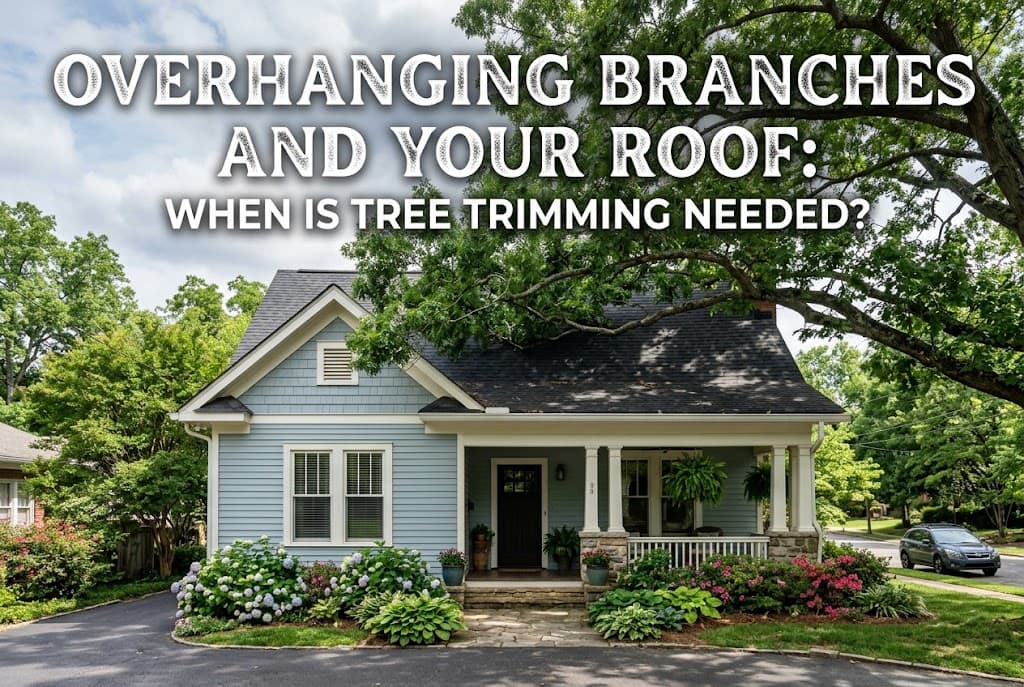
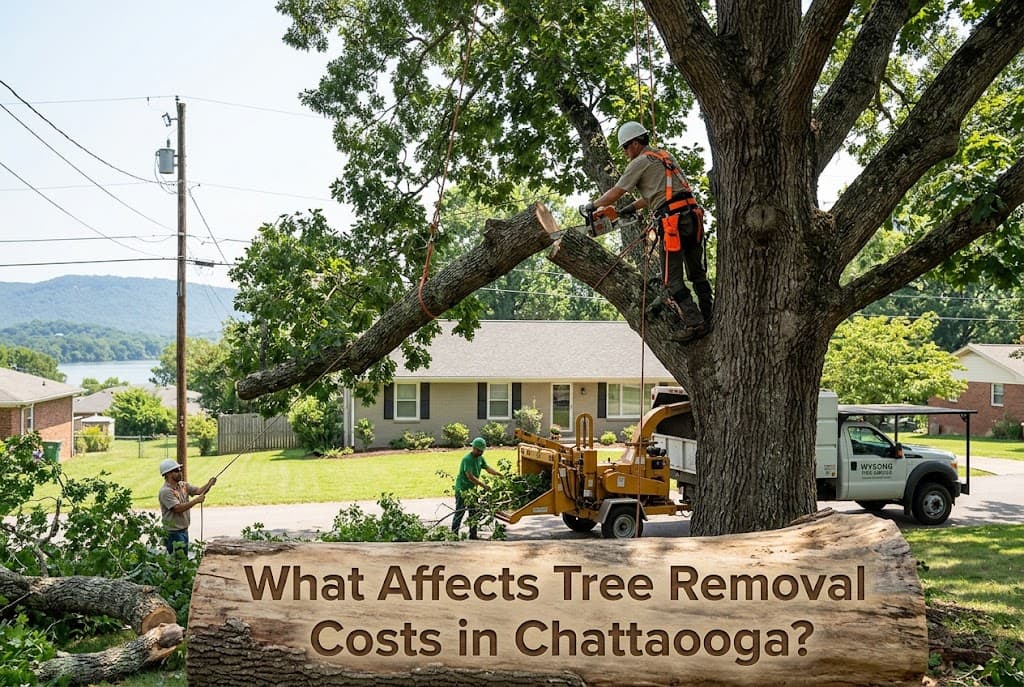
A tree close to a roof, garage, fence, driveway, or neighboring property may need to be dismantled in sections. Limbs cannot simply be dropped into an open yard. The crew may need to lower material in a controlled way and protect surfaces below. Tight spaces can take more planning and time.
Slopes, retaining walls, gardens, and fragile landscaping can also limit where workers and equipment stand. A tree over a regularly used entrance may require closing the area during work. Mention these conditions upfront so the estimate reflects them. If the tree touches or is close to an electrical line, keep away and contact the utility company for guidance; utility hazards require special coordination.
Property lines deserve attention. If a tree stands near the boundary or overhangs another yard, identify the issue during the estimate and communicate with the neighbor as needed. Don’t assume a crew can use someone else’s driveway or yard without an arrangement. Clear access and permissions prevent delays on the day of work.
Access and equipment affect the plan
Can a truck reach the tree? Is there a gate wide enough for equipment? Must debris be carried down a steep path or through a narrow side yard? The distance between the tree and a loading area can make a substantial difference in labor. Ground conditions may also limit heavy equipment after rain.
Ask how the crew plans to enter and where material will be staged. Show irrigation, septic components, underground utilities, low overhead wires, and areas the crew should not cross. Some of these features are not visible in a basic photograph. The right plan protects the site and makes the quote more accurate.
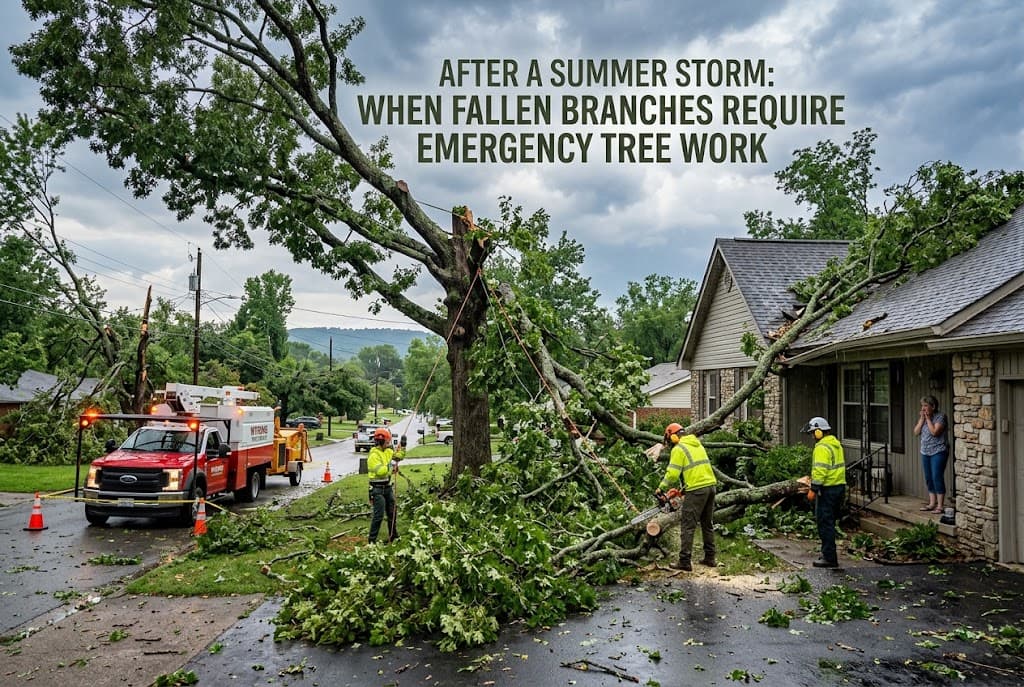
Emergency work may follow a different schedule from routine removal. A tree that has fallen on a building or blocked essential access needs prompt attention and may involve unstable wood. Explain the urgency honestly. A dead tree that has stood unchanged for months may still need removal, but it is not the same situation as a tree actively threatening an occupied area.
Condition can make a tree harder to handle
Dead, decayed, storm-damaged, or partially fallen trees can be unpredictable. A hollow trunk, split stem, or roots lifted from the ground may limit where workers can attach equipment or safely stand. A healthy green canopy doesn’t rule out a structural defect, and brown leaves alone don’t define the risk. Assess the tree’s physical condition in context.
If you know when a crack appeared or whether the tree shifted after a storm, share that history. Previous pruning, construction near roots, and recent branch failure may also be relevant. A clear description helps the crew plan an appropriate removal method and determine whether another nearby tree should be assessed.
Don’t try to make the job cheaper by cutting damaged limbs yourself before the visit. A partially cut branch can leave the remaining tree more dangerous and complicate professional work. Keep people away from visible hazards while you arrange help.
Decide what is included after the tree is down
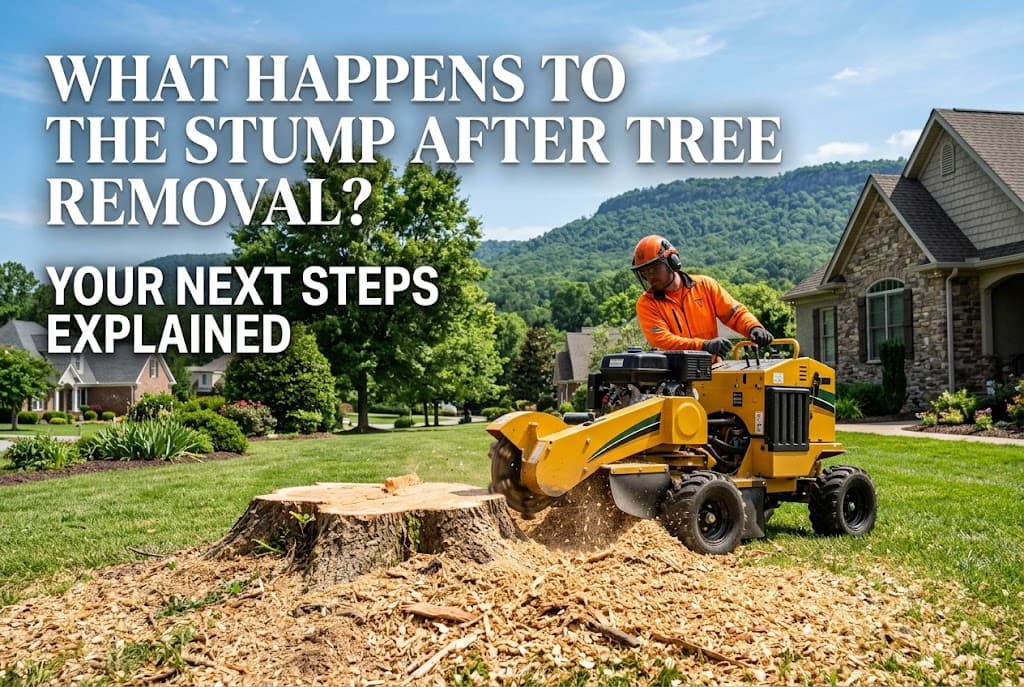
The phrase “tree removal” may mean different finished results. Ask whether the proposal includes branch hauling, trunk removal, chipping, site cleanup, and the height of the remaining stump. Stump grinding is often a separate line item. If you want logs or wood chips left on the property, say so before the crew plans disposal.
If you intend to plant grass, build a patio, or install a driveway where the tree stood, discuss that goal. Grinding a stump does not excavate every root or prepare a construction base. Soil, backfill, grading, and landscaping may require additional work. Comparing two quotes is difficult if one includes only cutting and the other includes grinding and hauling.
Ask how any unexpected work will be handled. A second hazardous trunk, hidden debris, or a change in access could affect the scope. A written estimate should identify the tree, the work, cleanup, and any exclusions so you can approve changes before they happen.
Compare value and clarity, not just a single number
Review each proposal line by line. Are the same tree and stump included? Will debris be hauled away? Are access limits and nearby structures accounted for? Ask about insurance and how the crew will approach the site. A very low number can be misleading if it leaves key tasks for you to arrange later.
Avoid expecting a precise price from a general online range. Local conditions, the tree’s size and condition, and the requested finish are too important to skip. An estimate is most useful when the provider can explain what work is necessary and why. You can then decide whether the proposed scope matches your priorities.
Wysong Tree Service provides tree removal and related services in Chattanooga and surrounding communities. Contact the team with the tree’s location, visible concerns, access details, and your preferred cleanup result to request an estimate tailored to the property.