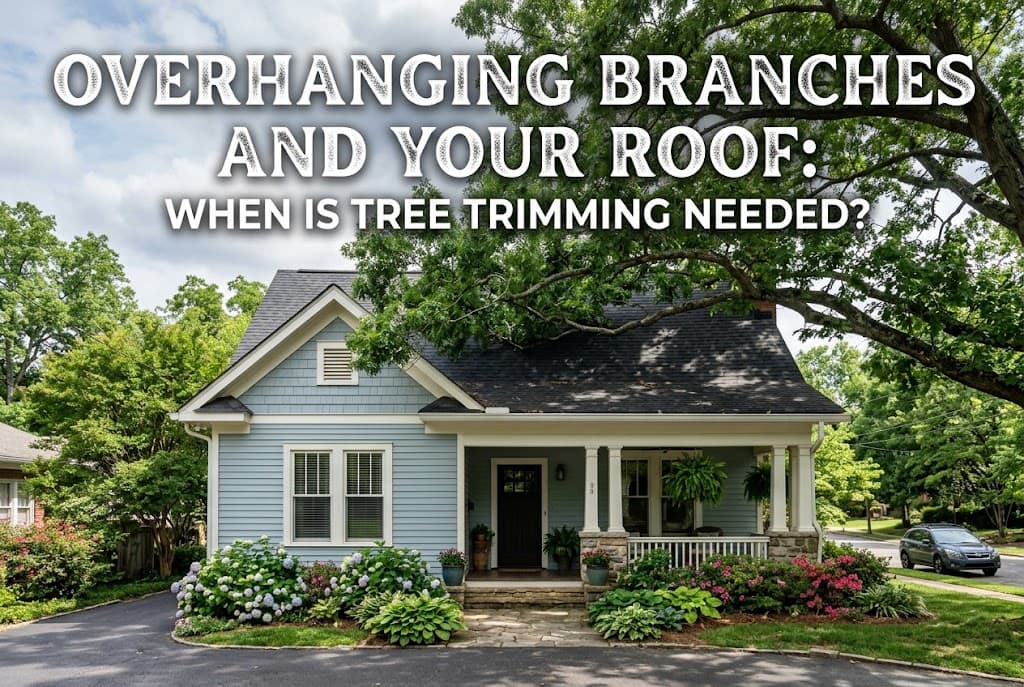
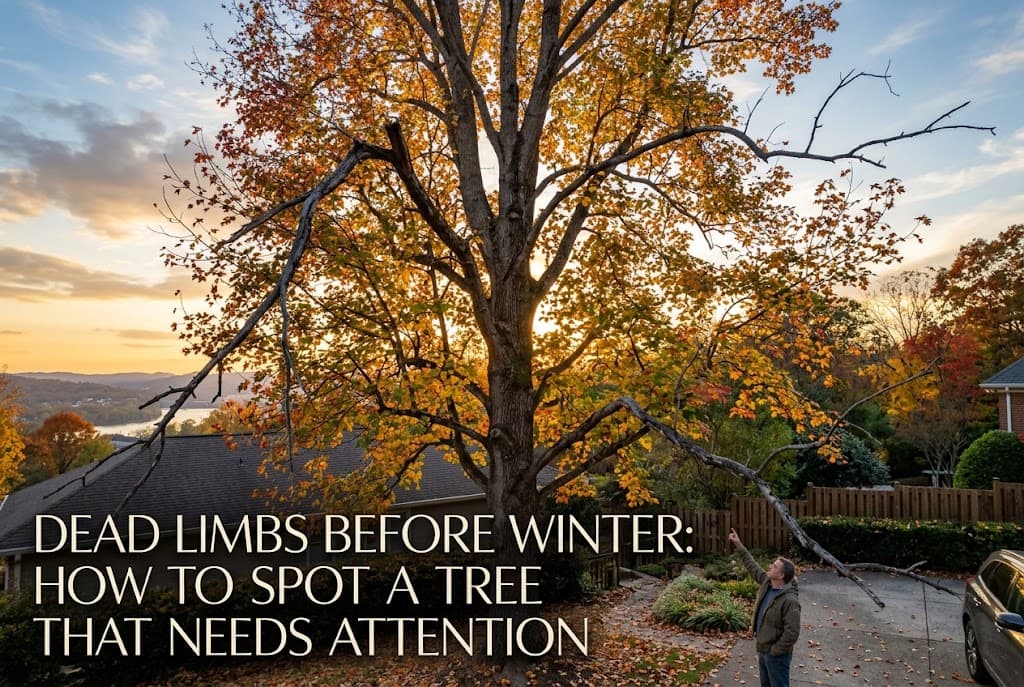
An October tree can look full of color while a dead limb is hidden inside the canopy. As leaves thin, branches and major connections become easier to see. That makes fall a useful time for Chattanooga homeowners to look for damage before winter wind or ice adds weight to the tree.
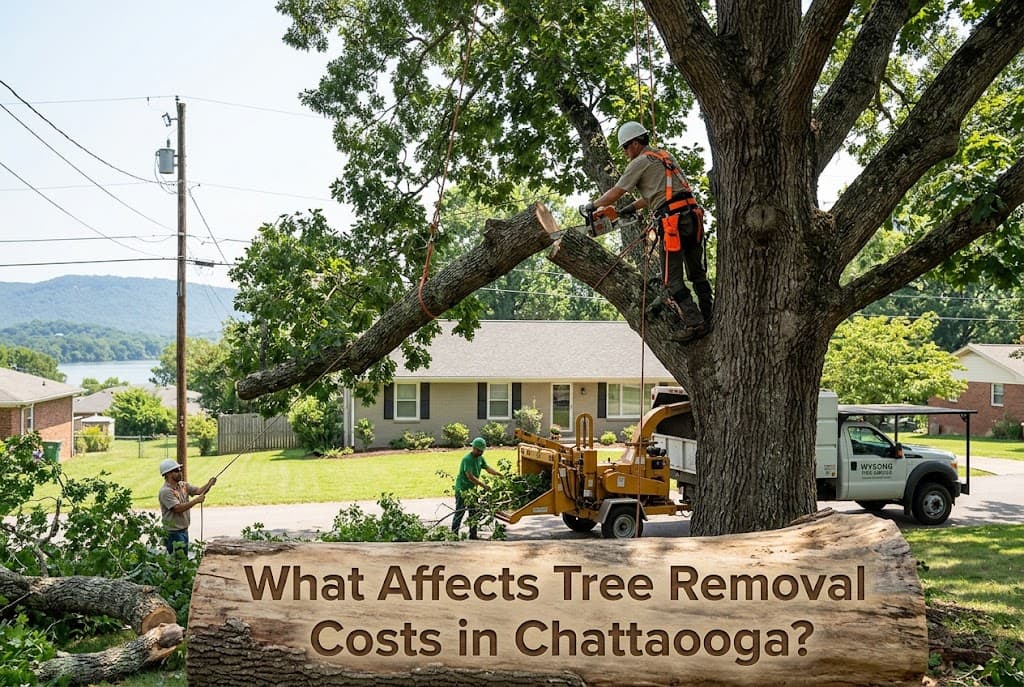
The point of a fall check is to notice conditions, not diagnose a tree from a distance. A single dead twig may be routine. A large dead branch over a roof, a split trunk, or a limb caught above a walkway warrants more attention. Wysong Tree Service offers tree trimming, removal, and emergency work when trees present concerns around Chattanooga area properties.
What deadwood may look like from the ground?
Dead branches may have no leaves while neighboring branches are still full, but leaf timing alone is not definitive. Some branches naturally shed earlier, and different species change color at different times. Look for a combination of clues: missing leaves during the growing season, brittle or broken tips, peeling bark, and wood that has not produced new growth. A professional can confirm what the branch’s condition means.
Look from several safe viewpoints. A branch may appear attached from one angle but show a break from another. If it is hanging in another limb, do not stand beneath it. Note what lies below: a driveway, entrance, play area, or open ground. The branch’s position helps determine how quickly the issue should be addressed.
Take a photograph from a safe place and compare it with summer images if you have them. If a branch lost leaves suddenly or broke during a recent storm, share that timeline with the crew. It helps distinguish a new concern from a longstanding shape that simply became visible after leaf fall.
Look beyond one branch
Scan the trunk and major branch connections for fresh cracks, splits, or areas where a limb has torn away. Check whether the tree has a new lean or soil has lifted around the base. Those signs can point to a broader structural concern that trimming one dead branch will not solve. Keep people away from a tree that has recently shifted or developed a major split.
Do not assume a tree is sound just because most of its canopy still has leaves. Structural damage can coexist with green growth. Likewise, a tree with several bare twigs is not necessarily a removal candidate. The extent of damage, where it occurs, and what the tree could strike are part of the assessment.
Think about recent changes around the roots. Construction, trenching, grade changes, and repeated vehicle traffic can affect a tree. If any of those took place during the year, mention them. The history may help explain why a branch or part of the canopy has declined.
Why timing matters before winter
Winter weather can add loads to branches and soften ground around roots. Dead or cracked limbs may be more likely to break in wind or ice, though no inspection can predict every failure. Finding a concern in fall gives you time to schedule an assessment rather than waiting until a branch lands on a driveway.
Don’t rush into severe pruning just because the calendar says winter is coming. The right work depends on the tree and the defect. Selective removal of dead or damaged wood may be appropriate; topping or stripping a large portion of the canopy can cause other problems. Ask the crew what each proposed cut is intended to accomplish.
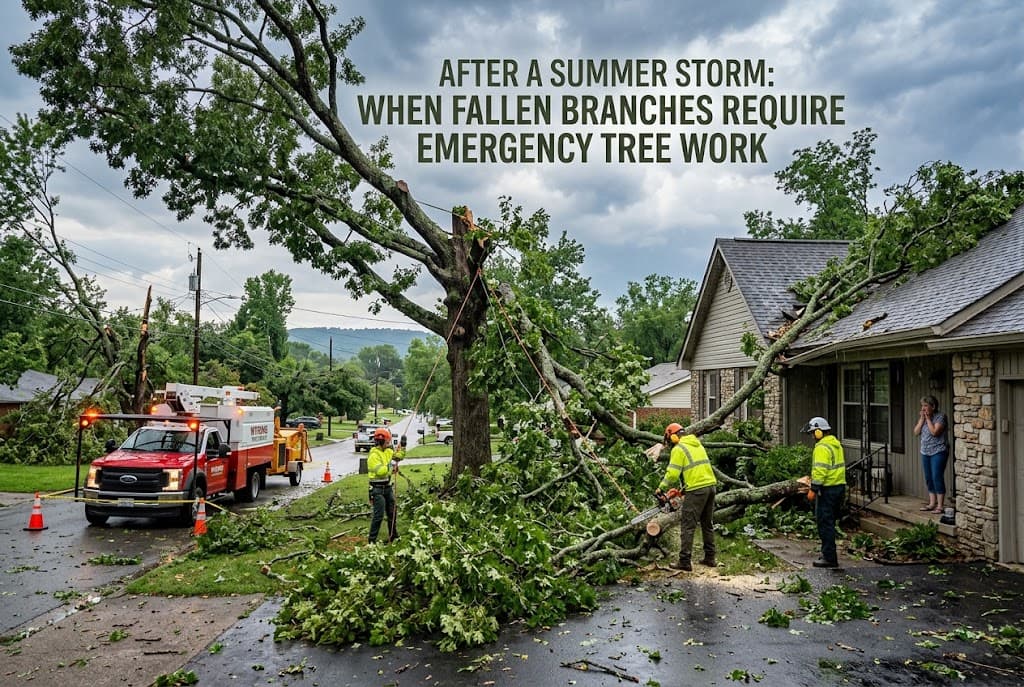
If a limb is already hanging or a tree has moved suddenly toward a structure, treat it as more urgent than routine seasonal maintenance. Keep the area clear and ask about emergency tree work. Weather preparation helps, but an active hazard calls for a response based on its current condition.
Avoid risky inspection and cleanup methods
Do not climb into a tree, shake a suspect branch, or use a ladder with a saw. A dead limb can break unexpectedly, and a partially cut branch may swing or fall in an unexpected direction. Assess the tree from the ground and leave elevated work to a qualified crew with the appropriate equipment.
Branches near power lines require the utility company. Stay clear of the tree and wire, and seek guidance before attempting any work. Even branches that are not currently touching can move into a line while being cut. Tell the tree service about all visible overhead lines during an estimate.
Keep ordinary leaf cleanup separate from hazardous tree work. Clearing leaves from the lawn or gutters does not address a cracked limb above them. If you hire someone to clean gutters, tell them about any overhead branch concerns, and don’t ask them to remove tree limbs from a ladder.
Prepare useful information for an estimate
Identify the tree and the branch in photographs. Describe the approximate location, when you first noticed the issue, and whether anything has fallen. Mention structures, vehicles, and paths beneath it. Ask whether the proposed work includes debris removal and whether the remaining tree should be monitored.
If removal is recommended, ask why pruning would not adequately address the concern. If pruning is recommended, ask what will be cut and how the tree will retain a sound structure. These questions invite a specific recommendation instead of a vague instruction to “cut it back.”
After the work, keep photographs and the written scope. Check the area again after strong wind or ice and record any new change. Trees keep growing and respond to their surroundings, so a fall inspection is one step in ongoing property care rather than a permanent guarantee.
Wysong Tree Service can assess visible limb damage and discuss tree trimming or removal in Chattanooga and nearby communities. If a dead branch hangs over a place people use, contact the team before winter weather makes access or cleanup more difficult.
If the tree has sentimental or landscape value, say so during the assessment. That does not mean a dangerous limb should stay in place. It helps the crew explain whether selective pruning can preserve the tree, what it will likely look like, and whether future monitoring is advisable. If removal is the sound recommendation, ask what will happen to the stump and whether a replacement tree could be planted in a more suitable location. A decision can balance safety with how you want the property to look.
On a property with many mature trees, begin with the ones over buildings, entrances, parking areas, and frequently used paths. A ground-level walk helps you prioritize, but it’s not a substitute for a professional inspection of every tree. Note dates and locations so you can follow up on each concern separately instead of treating the entire property as one vague problem.