When a tree comes down, the trunk and branches may leave the property, but the stump may remain. For some homeowners, that is fine for the moment. For others, the stump sits in the middle of a future garden, lawn, driveway project, or walking path. Understanding the next step helps you choose a scope before the crew begins.
Wysong Tree Service offers tree removal and stump grinding in Chattanooga and nearby communities. These services are related, but the estimate should state whether it includes grinding. Here is how to think through the stump, the cleanup, and the way you plan to use the space.
Why a stump may remain
Removing the aboveground tree does not automatically mean digging out its roots. Cutting a tree near ground level leaves a stump and an underground root system. A stump may be acceptable in a remote area, but it can interfere with mowing, landscaping, and foot traffic in areas people use. It also takes up space that could otherwise be planted or improved.
Before tree removal, ask where the final cut will be and whether the proposal includes stump grinding. If you are comparing estimates, make sure they describe the same finished result. An estimate for tree removal only may be lower than one that includes grinding, debris hauling, and restoration. Clear details prevent disappointment after the tree is gone.
Do not assume a stump will disappear quickly on its own. Natural decay can take a long time and varies with the tree and conditions. Homeowners who need the space soon should discuss grinding or another suitable method rather than planning around an uncertain timeline.
What stump grinding does
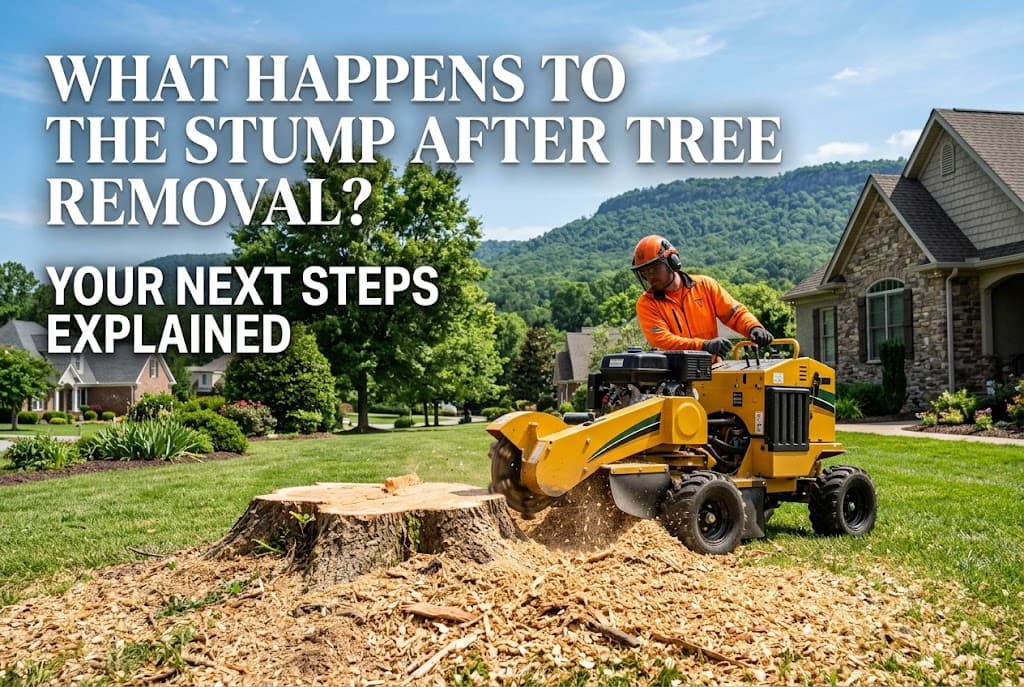
A stump grinder mechanically reduces the visible stump and some surrounding wood below the surface. The work creates wood chips mixed with soil. Discuss grinding depth and the area covered based on the site’s next use. A shallow lawn repair and a construction project may have different requirements.
Grinding is not the same as excavating the entire root system. Roots usually remain in the ground and decay over time. Some species may produce sprouts from remaining roots, so ask what to watch for afterward. If a builder needs a foundation, utility trench, or paved surface in the area, confirm with that professional whether grinding alone is sufficient. That project may require additional excavation.
Access matters. A stump in an open front yard may be straightforward, while one behind a narrow gate, close to a wall, or on a slope may require a different approach. When requesting an estimate, show the crew the stump and nearby obstacles. Also identify irrigation, landscape lighting, buried utilities, and other features that may be in the work area.
Decide what happens to the chips
Grinding produces a mound of chips and soil. Ask whether the crew will leave that material, spread it, or haul it away. The answer affects the site’s appearance and the steps needed before you seed or plant. The volume can be greater than expected, especially for a large stump.
If you leave the chips, don’t cover a deep mound with a thin layer of topsoil and expect a level lawn. As the organic material breaks down, the area may settle. Remove or redistribute excess chips as appropriate for the intended use, fill the depression with suitable soil, and allow for settling. A landscaping professional can advise on the preparation needed for turf or new plantings.
If you want to use chips elsewhere, discuss that before work starts. Their suitability depends on the planting context and material. Keep them away from places where they would block drainage or make walking surfaces uneven. The key is to decide who handles the material rather than discovering an unexpected pile after grinding.
Plan the next use of the space
For a lawn, aim for a safe, reasonably level area that can be mowed and replanted. For a flower bed, consider the remaining roots and how much soil you need for the plants you want. For a patio, walkway, or driveway, consult the installer about excavation, compaction, and base preparation. A stump grinder opens up options, but it doesn’t do every step of a hardscape project.
If you hope to plant a new tree, avoid assuming it can go in the exact same hole. The old roots, chips, available soil, and space for a mature canopy all matter. A planting professional can help choose an appropriate nearby location and species. The aim is to give the new tree enough room above and below ground, not simply to replace a trunk in the same spot.
Think about the broader yard as well. Once you remove a tree, sun exposure and the view from the house may change. Before paying for final restoration, decide whether to add a new planting, expand a garden, or leave the area open.
Ask the right questions before approving the work
Tell the tree service how you intend to use the site. Ask how far below grade the stump will be ground, how wide the area will be, and what will happen to the chips and debris. Ask whether access limitations or nearby utilities affect the work. If there are several stumps, identify each one so the estimate is complete.
Keep the scope in writing. Tree removal, stump grinding, hauling, backfilling, and seeding are distinct tasks, and a provider may offer some without the others. The exact package matters more than the estimate label. If the stump is already in a hazardous location for foot traffic, keep people clear until the area is made safe.
Wysong Tree Service can discuss stump grinding as part of a tree removal project or for an existing stump in Chattanooga and surrounding communities. Contact the team with the stump’s location, approximate size, and your plans for the space to request an estimate.
If the tree was removed because of disease or decay, ask a knowledgeable tree professional whether that history affects future planting nearby. The answer depends on the cause and the species; a stump’s appearance alone is not a diagnosis. Also check for sprouts in the months after grinding. Cutting sprouts as they appear may be necessary for some trees, and a recurring problem may call for further advice. Keep children and pets away from exposed holes or uneven chips until you restore the surface.
Before scheduling, take a few photos that show both the stump and the route equipment would use to reach it. Include a gate opening or narrow side yard if access is limited. This helps the crew identify practical constraints early. When the work is done, compare the finished area with the written agreement and ask what additional soil or landscaping work remains your responsibility.