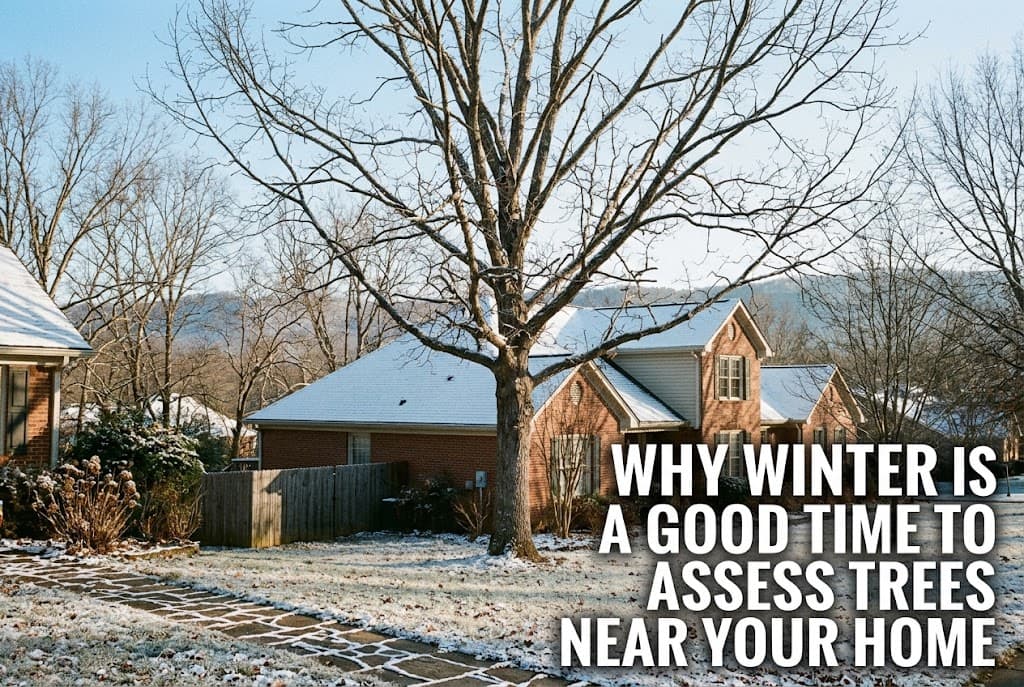
Winter changes the view of a Chattanooga yard. Once deciduous trees lose their leaves, branches that were hidden all summer become easier to see. A limb hanging over the roof, a split between two stems, or a branch caught high in the canopy may stand out for the first time. That makes January a useful month to take stock of the trees around your home.
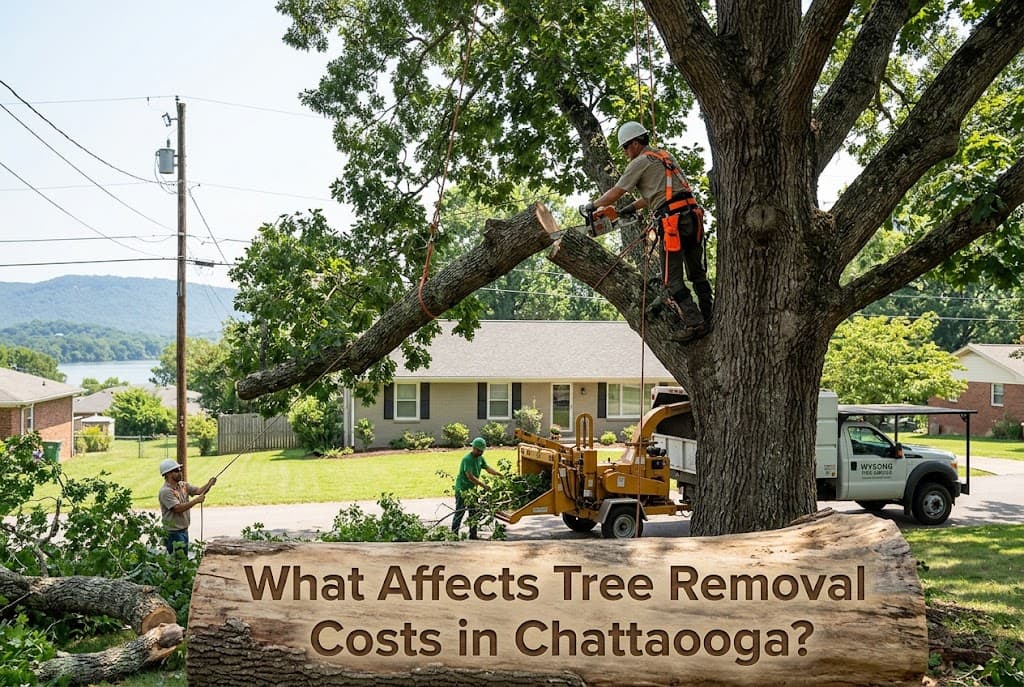
An inspection does not mean every imperfect tree needs to come down. Trees grow in different shapes, and some have lived safely with an old lean for years. The purpose is to notice changes and decide which concerns deserve a closer look. Wysong Tree Service helps property owners in Chattanooga and nearby communities assess tree concerns and plan trimming, removal, or emergency work when appropriate.
Start with the places people use
Before studying every tree on the property, look at where a falling branch would matter most. Stand well clear and scan trees near the house, driveway, front walk, play area, patio, and frequently used parking space. A dead limb above an unused corner of the yard presents a different concern from one over the main entrance. The location helps you decide which tree to ask about first.
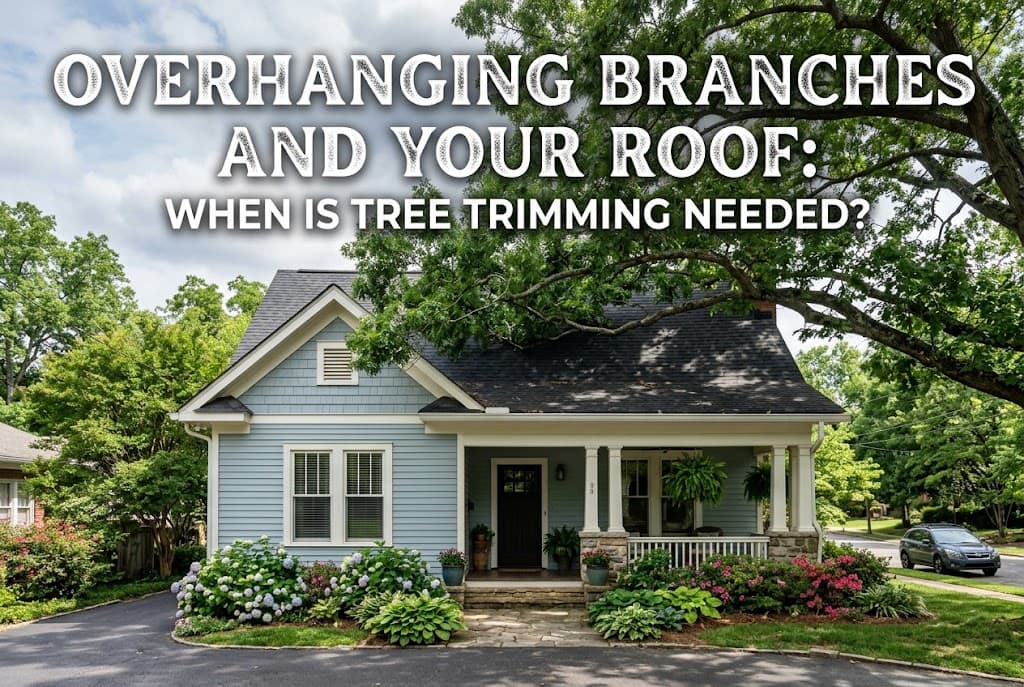
Notice branches that touch a roof, hang over a chimney, or scrape siding. A branch that rubbed a building during summer wind may be easier to identify without leaves. Also check whether growth narrows access for vehicles or pedestrians. You do not have to decide how much to prune from the ground. Record what you see so a tree professional can discuss clearance and the tree’s overall condition.
Keep your inspection at ground level. Do not climb a ladder, walk beneath a hanging limb, or try to pull a branch out of another tree. A suspended branch can shift without warning. If you see a branch or tree touching an electrical line, stay away and contact the utility company.
Look at the trunk and major branches
From several safe viewpoints, look for fresh cracks in the trunk, a split where large stems meet, and branches that appear broken but have not fallen. Also note any hollow opening or decayed area. Its presence alone does not tell you how much strength the tree has left. The size and position of the defect, the amount of remaining sound wood, and what the tree could strike all affect the next step.
Compare the tree with older photographs if possible. Did it lean the same way last winter? Is a crack new, or has the bark looked that way for years? A noticeable change after wind or heavy rain deserves attention. If the tree has recently shifted toward the house, keep people out of the area until someone can assess it.
Winter can also reveal crowded or crossing limbs. Some may rub each other and create wounds over time. Others are normal parts of the tree’s form. A qualified professional can distinguish useful pruning from cuts that would remove too much living canopy or leave the tree poorly balanced. Avoid topping a tree to make it look smaller; severe, indiscriminate cuts can create weak regrowth and other problems.
Do not forget the roots and ground
The visible trunk is only part of a tree’s support system. Walk around the base without digging or disturbing roots. Look for soil that has recently lifted, newly exposed roots, or a gap on one side of the trunk. These changes can be especially concerning after a storm. Saturated ground may affect a tree’s stability, so take a new lean seriously after prolonged rain.
Also consider recent activity near the tree. Trenching, grading, repeated vehicle traffic, and construction can damage or compact soil around roots. A tree may not show an immediate change in its leaves, and the effects can appear later. Tell the person assessing the tree about any work near its base, even if it happened months ago.
Do not treat mushrooms or surface roots as an automatic removal order. They can be useful clues, but an assessment needs context. The goal is to connect what you can see with the tree’s history and the consequences if it fails.
Decide what needs attention now
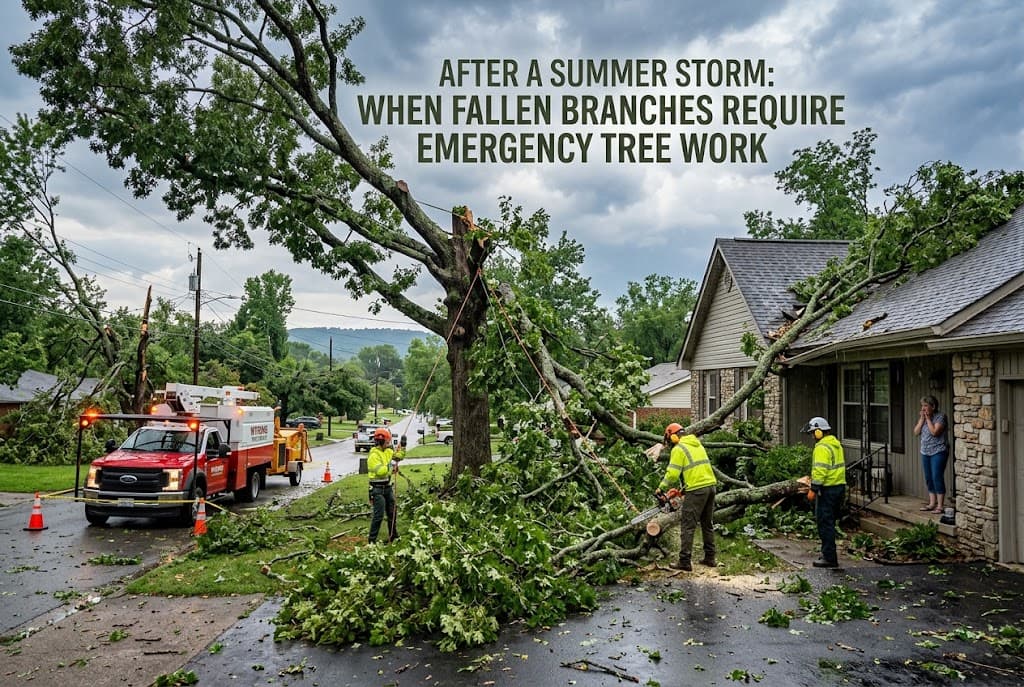
Make a simple list: the location of each tree, the concern, and when you first noticed it. Photos from a safe distance help show change over time. A tree with a small clearance issue may be scheduled for routine trimming. A broken limb over an entrance, a fresh trunk split, or a sudden lean needs more prompt evaluation. A tree that is actively falling or blocking essential access may require emergency tree work.
The right solution may be targeted pruning, monitoring, or removal. Winter visibility helps with the conversation, but the season alone does not determine the answer. Species, health, structure, site conditions, and nearby targets matter. A professional assessment can help avoid both unnecessary removal and delayed action on a genuine hazard.
Plan ahead for the rest of the year
January is also a practical time to think beyond one problem branch. If a mature tree shades the home, maintaining it may be worth careful planning. If a dead tree needs removal, ask what will happen to the stump and debris. If you plan construction, discuss equipment access and how to protect trees you want to keep before work begins.
Keep the notes and photographs you take this winter. They provide a useful comparison after spring storms or summer growth. Repeat a brief ground-level check after severe weather, especially for trees close to buildings and paths. Regular observation cannot prevent every failure, but it can help you spot changes early.
Wysong Tree Service serves Chattanooga and surrounding communities with tree trimming, tree removal, stump grinding, and emergency tree work. If winter reveals a broken limb, new lean, or other concern near your home, contact the team to discuss an assessment and the safest next step.
When discussing an estimate, ask the crew to identify the particular tree and the work proposed for it. If the recommendation is removal, clarify how the site will be left, whether wood and branches will be hauled away, and whether stump grinding is a separate service. These questions are especially useful when several trees stand close together. They also help you compare a routine maintenance visit with work that addresses an immediate safety concern. Keep the written scope with your property records so you can refer to it during future inspections.
If you are unsure which concern is urgent, describe the situation when you call. Explain whether the tree has recently moved, whether a branch is broken and suspended, and what lies beneath it. Describing the possible impact is more useful than saying only that the tree looks old. Until the area has been assessed, keep people away from the suspected hazard and avoid parking under it.