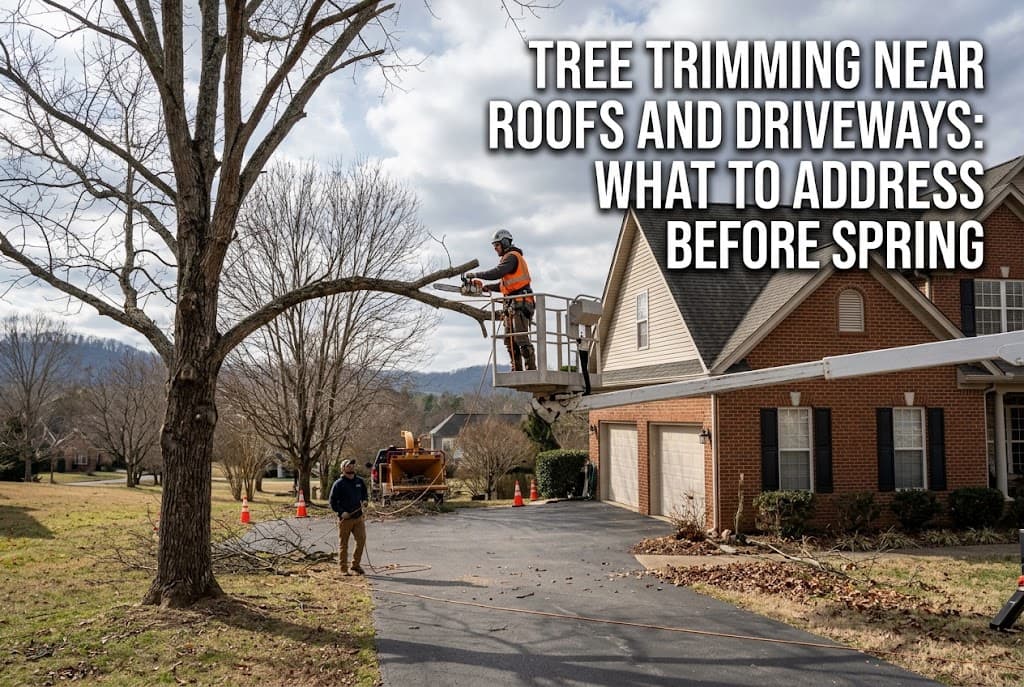
A tree can be a favorite part of a property and still need attention where it meets the house. Branches may brush the roof, narrow a driveway, or hang over a daily-use path. Before spring growth fills the canopy, February offers a clear view of those trouble spots on many deciduous trees around Chattanooga.
Tree trimming should have a purpose. The aim is not to cut every branch that approaches a building or to force a mature tree into a rigid shape. It is to improve clearance, address damaged wood, and preserve as much healthy structure as the situation allows. Wysong Tree Service provides trimming for Chattanooga area properties and can help determine what work makes sense for a particular tree.
Identify the actual clearance problem
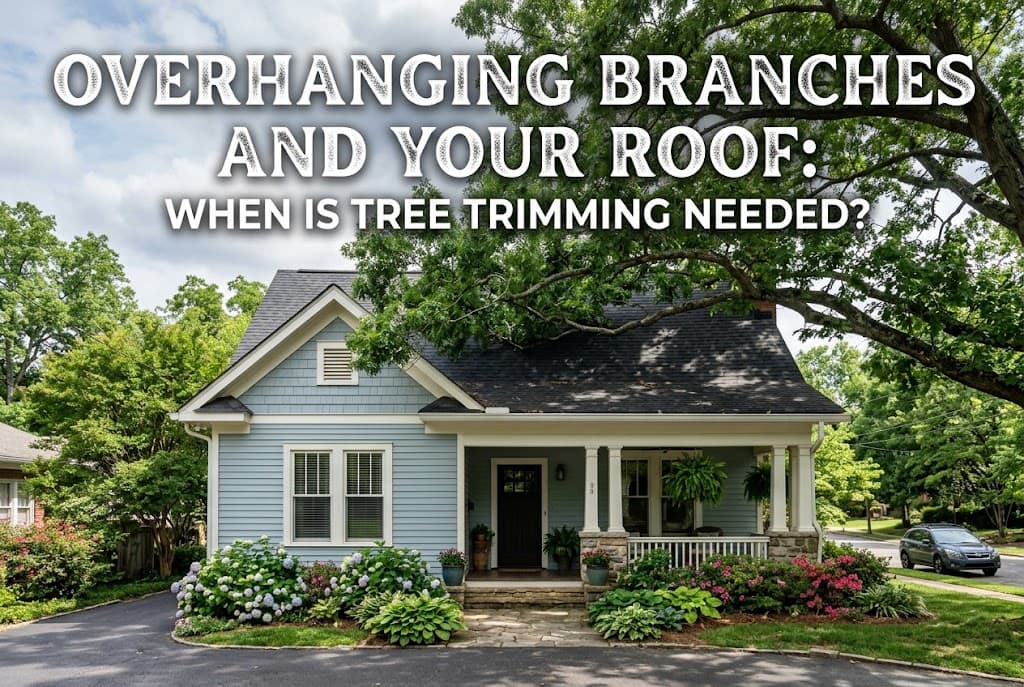
Walk around the property and note where branches make contact. A twig touching a gutter is different from a heavy limb resting on a roof. Watch for branches that scrape siding, interfere with a garage door, obstruct a driveway, or reduce visibility near an entry. If you have heard a branch strike the home during wind, tell the crew; the contact may not be obvious on a calm day.
Consider where a branch may fall if it breaks. A large limb above a parked car or busy walkway deserves more attention than a similar branch above open ground. Look for dead, cracked, or partially broken wood as well as simple crowding. A tree professional can evaluate both clearance and structural condition rather than treating all overhanging growth as the same problem.
Take photos from the ground and mark the areas you want to discuss. Avoid climbing onto the roof to inspect the canopy. If a branch has already damaged shingles or gutters, arrange for the appropriate building inspection separately; tree trimming and roof repair solve different parts of the issue.
Understand what proper trimming can accomplish
Pruning may remove dead or damaged branches, create clearance, or improve the structure of a young tree. Choose cuts based on the tree’s species, age, condition, and natural form. Removing a branch in the right place can be more effective than repeatedly shortening its tips. Excessive cutting can stress a tree and lead to growth that is difficult to manage later.
Ask what the finished clearance is intended to achieve and how the crew will avoid unnecessary damage. A healthy tree may need selective cuts around a building, while a tree with a major crack or unstable roots may need a different plan. Trimming cannot repair every structural defect. If the tree is too compromised to remain near the home, removal may be the safer recommendation.
Do not ask for topping as a shortcut. Cutting large limbs back to arbitrary stubs can leave wounds and encourage weakly attached sprouts. It can also change the tree’s appearance without solving the underlying risk. A clear explanation of the pruning objective makes it easier to compare recommendations and approve work you understand.
Keep driveways, paths, and entrances in the plan
Roof clearance gets attention, but everyday access matters too. Low branches may force delivery vehicles toward the edge of a driveway or make a walkway uncomfortable to use. A branch that seemed harmless in winter may hang lower when it carries leaves and rainwater. Tell the crew what vehicles use the drive and which paths need comfortable clearance.
For a commercial property, consider loading areas, parking spaces, signs, and entrances. For a home, consider the routes used by children, visitors, and service providers. A practical trimming plan should address the places people actually move through, not just the street view.
Growth rates vary, so do not expect a single cut to provide permanent clearance. Ask when to check the area again. Regular, moderate maintenance can be easier on a tree than waiting until branches are heavily overgrown and requesting drastic cuts.
Treat utility lines as a separate hazard
Branches near electrical lines require special care. Do not touch the tree, use a ladder nearby, or try to trim the branch yourself. Contact the utility company for direction, particularly when a branch is touching a line or a line is down. Even a tree that seems safely distant can become hazardous when a branch moves during cutting.
When requesting an estimate, point out overhead wires and any other site constraints. Also mention tight access between buildings, a steep slope, or a fence that limits equipment. Those details help the service plan the work and explain what is included in the estimate. If the tree is already damaged and threatening an occupied area, ask about the urgency instead of waiting for routine scheduling.
Prepare for a useful estimate
When you contact a tree service, identify the tree, explain the contact or clearance issue, and describe any visible damage. Ask which branches they propose removing, whether debris cleanup is included, and how the crew will protect nearby landscaping. If several trees need attention, prioritize the one most exposed to people or structures.
It is also useful to ask whether the work should be coordinated with other property plans. If you expect to replace a roof, install a fence, or renovate a driveway, sharing that timeline may help avoid duplicate visits. However, do not delay an urgent hazard for the sake of a future project.
February provides a chance to make these decisions before spring growth obscures the view. Wysong Tree Service can assess branches near roofs, driveways, and entrances in Chattanooga and surrounding areas. Contact the team to discuss tree trimming, a free estimate, and a plan that fits your property.
After trimming, take a photo of the clearance from the same angle you used before the work. It becomes a useful reference when leaves return and branches begin to grow. Check the area after strong wind for new damage, but leave any hanging limb for a professional to address. If you own several trees along the same driveway, record which ones were trimmed and why. That simple history helps you explain future concerns without asking a new crew to guess what was done in the past.
One common question is whether to remove a branch because it grows toward a roof but hasn’t reached it yet. No universal distance answers every case. The branch’s size and growth, the tree’s condition, and the building’s location all matter. Discuss the likely future growth with the crew and ask when to review the clearance. If the branch is small and sound, a measured plan may preserve more of the canopy than a large preventive cut. If it is cracked or heavy over a busy entrance, the recommendation may be more immediate.