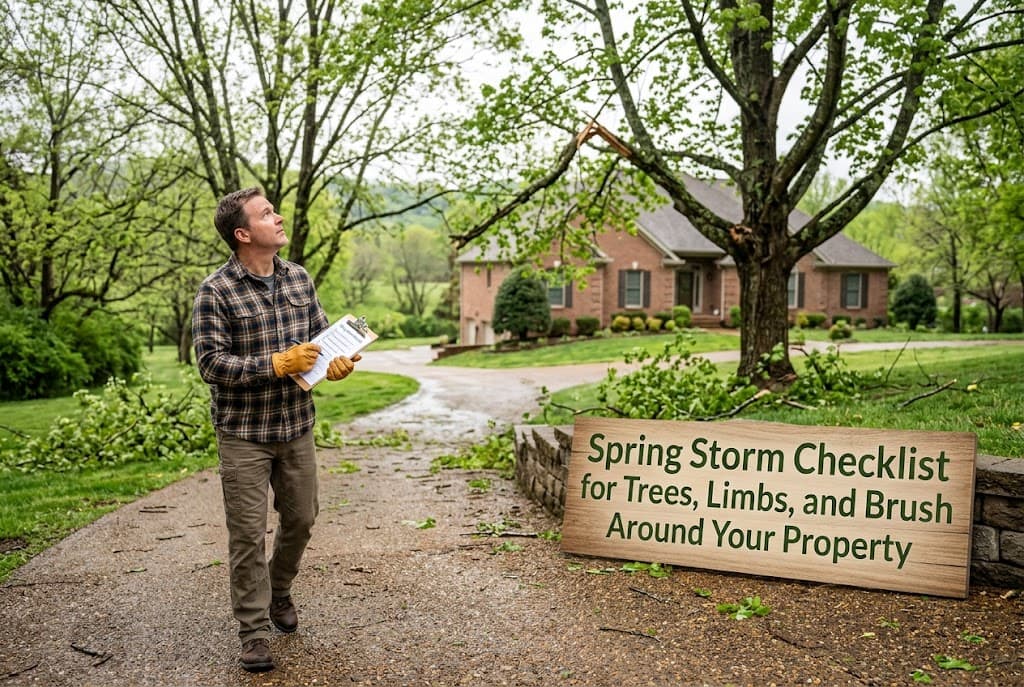
Spring brings fresh growth to Chattanooga, along with weather that can change quickly. Wind and heavy rain may expose a weak branch, soften the ground around roots, or scatter limbs across a driveway. You cannot make a yard stormproof, but you can look for visible concerns and plan work before a forecast becomes urgent.
This checklist is designed for a walk around your property from safe ground. It covers trees, access points, and brush that may complicate cleanup. Wysong Tree Service offers tree trimming, removal, brush removal, and emergency tree work in Chattanooga and nearby communities.
Begin with a safe view of the canopy
Stand back from each tree and look up from multiple angles. Check for dead branches, cracked limbs, hanging wood, and a split where major stems meet. A branch caught in another branch can remain suspended long after the storm that broke it. Do not walk beneath it or try to pull it down with a rope.
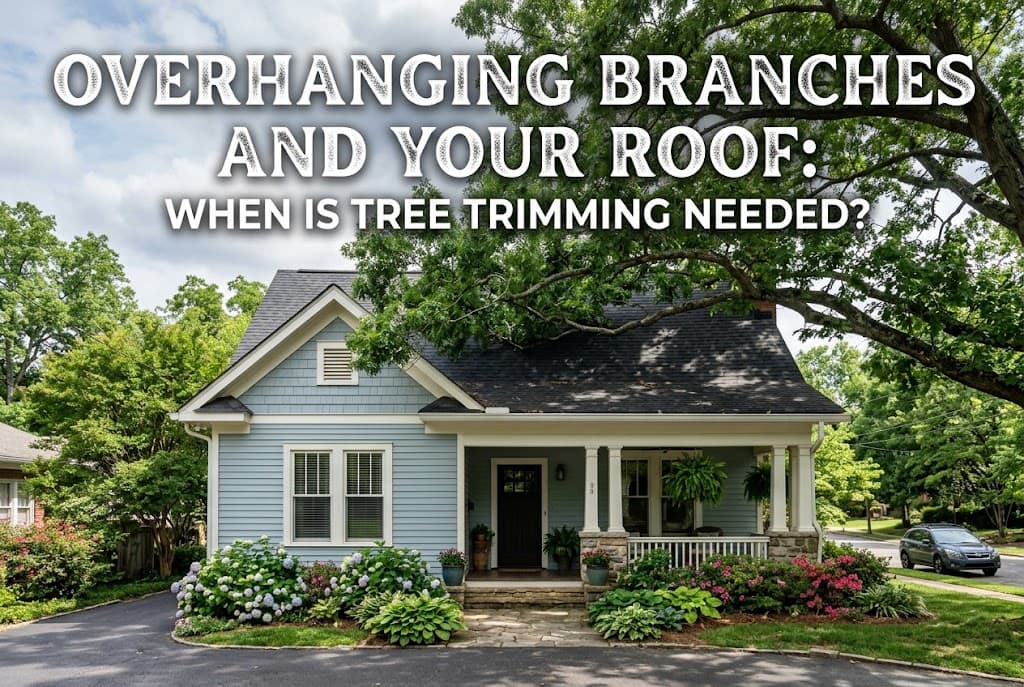
Watch what the branch could strike. Note trees over a roof, vehicle, patio, entrance, or play space. If a branch rubs against siding or lies on the roof, a professional can discuss trimming for clearance. If a large limb has cracked, the issue may need faster attention than ordinary maintenance.
Not every tree with an uneven crown is unsafe. Many healthy trees grow in irregular shapes. Use photographs from a previous season, if available, to identify meaningful change. A professional assessment can distinguish a visible defect from normal form and recommend appropriate work.
Check the trunk, roots, and recent lean
Look for a fresh trunk crack, an opening that has changed, soil lifting at the base, or newly exposed roots. Treat a tree that began leaning after heavy rain or wind differently from one that has grown at the same angle for years. Keep people away from a tree that has shifted suddenly, especially if it points toward a building or walkway.
Think about work near the roots since the last storm season. Grading, trenching, or repeated vehicle traffic can affect the ground around a tree. Share that history when requesting an assessment. Leaves may look healthy even when a structural issue is present, so do not rely on canopy color alone to judge stability.
Avoid digging around the base to investigate. A ground-level observation and clear photographs are useful starting points. If the tree is near an electrical line, stay clear and contact the utility company instead of approaching it.
Make access and drainage visible
Walk the routes people would need after a storm: driveway, gate, front entrance, and path to any detached building. Identify trees or branches that could block the only way in or out. Move outdoor furniture and vehicles away from a branch that concerns you if it is safe to do so before weather arrives.
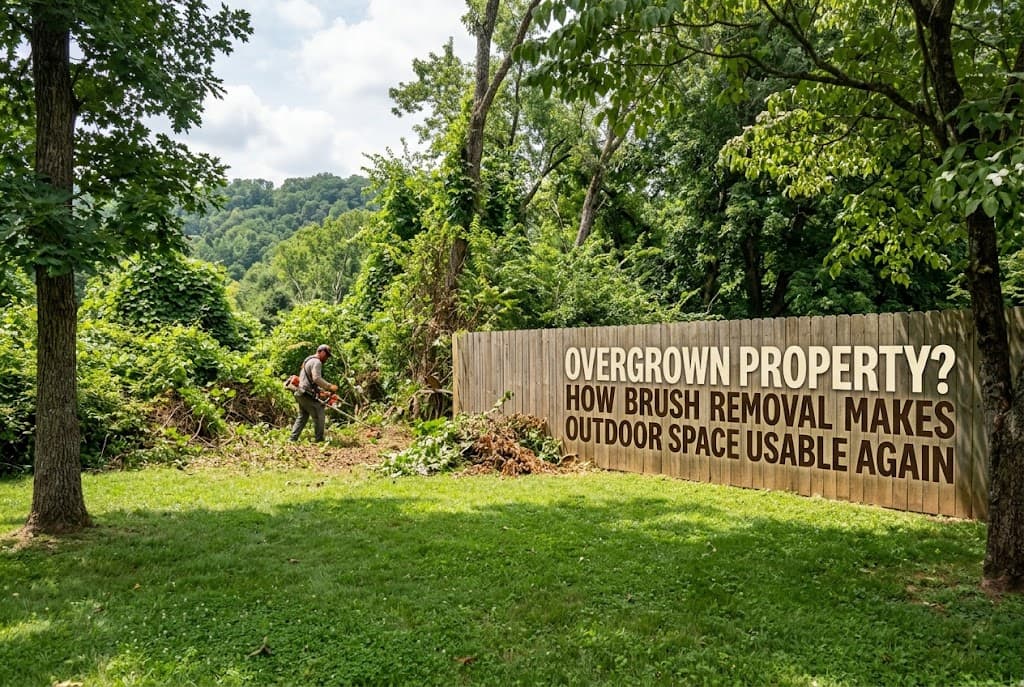
Overgrown brush can hide fallen limbs, debris, uneven ground, and drainage paths. Clearing brush along access routes may make the property easier to inspect and maintain. It does not replace drainage repair, but it can reveal where water collects and where other property work may be needed. If the brush includes small trees or large stumps, clarify the scope when seeking an estimate.
Check gutters and drainage separately as part of ordinary home maintenance. Water running across the yard does not automatically mean a tree has a root problem, but saturated ground combined with a new lean is a concern to report. Keep these observations distinct so each professional can address the right issue.
Know what to do when a storm is underway
Once severe weather arrives, stop inspecting trees outside. When possible, stay away from windows facing visibly damaged trees and follow local weather guidance. Do not attempt to trim a limb in wind or rain. Wet ground, moving branches, and hidden wires make an already difficult task more dangerous.
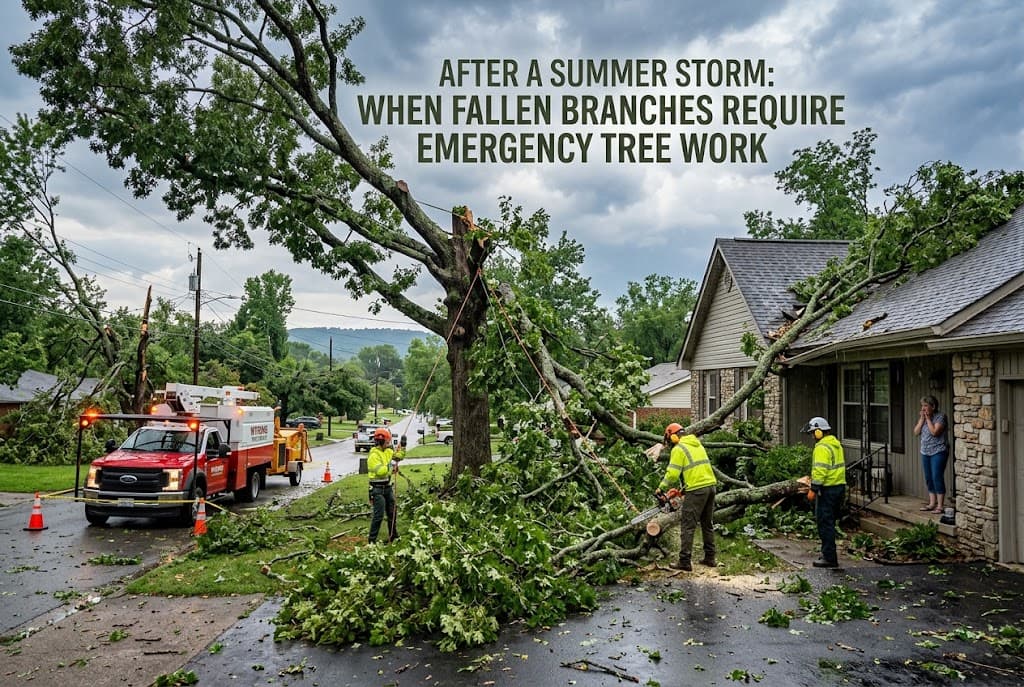
Afterward, view the property from a safe place before walking through it. Treat downed wires as energized, even if the neighborhood has lost power. Keep away from trees touching lines, nearby fences, and pooled water. Call the utility company or emergency services as appropriate. A suspended limb or tree resting against a structure may shift as weight changes.
If access is blocked, explain that when calling for emergency tree work. Mention whether the tree is on a building, vehicle, or roadway, and whether power lines are visible. Photos from a safe distance can help describe the scene. Do not delay an urgent safety response to take photographs.
Turn your notes into a practical work plan
Create a short list of concerns before calling a tree service. Separate routine trimming and brush removal from urgent structural damage. Ask what the proposed work includes, whether they will haul away debris, and whether a stump will remain after tree removal. That makes the scope clear and helps you prepare the property for the crew.
After work is complete, keep a record of the trees addressed and the recommendations for future checks. Inspect again after a major storm or when you notice a new lean, crack, or hanging branch. Preventive work can reduce some risks, but it cannot guarantee that no tree will be damaged by severe weather.
Wysong Tree Service serves Chattanooga and surrounding communities with routine and emergency tree services. If your spring walk reveals a damaged limb, hazardous tree, or overgrown access route, contact the team to discuss the next step before the next storm.
For larger properties, repeat the walk at the edges of the area you regularly use. A fallen limb at the back of a lot may be less urgent than one over an entrance, but it can still block a path or conceal other debris. Share a simple map or marked photographs with the crew when there are several work areas. Clear directions reduce confusion about which trees to evaluate and which vegetation you want to keep. If you are managing a rental or business property, identify the person who can approve the work and provide access when a crew arrives.
Make the checklist easy to repeat. Photograph the same tree from the same spot at the beginning of spring and after a strong storm. Note dates rather than relying on memory. This record can show when a lean appeared or a branch changed position, making a professional conversation more specific. It is not a substitute for an assessment, and a photograph cannot reveal every internal defect. It simply gives you a better account of what changed. If the scene looks unstable, do not step closer for a better picture; use the view you can obtain safely.